

The Liverpool World Museum has been accused of using historically inaccurate and anachronistic references to Palestine in its Ancient Egypt Gallery.
UK Lawyers for Israel (UKLFI) has written to the Director of National Museums Liverpool and the Head of the Liverpool World Museum calling for the correction of several historically inaccurate labels in the museum’s Ancient Egypt collection. The letter highlights three instances where the museum uses the term “Palestine” to describe regions in the 3rd and 2nd millennia BC—centuries or even millennia before the term first appeared in historical records.
The letter, sent to Laura Pye (Director of National Museums Liverpool) and Ashley Cooke (Head of World Museum), explains that the descriptions relating to King Scorpion (c. 3250 BC), the Hyksos period (c. 1650 BC), and a limestone carving of Thutmose I (c. 1473–1458 BC) incorrectly apply the term “Palestine” to eras when no such geographical or political entity existed.
UKLFI’s letter outlines that:
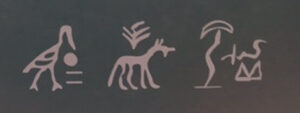
- King Scorpion’s burial goods are described as including “Palestinian wine”, despite the fact that the term “Palestine” did not exist in 3250 BC. The correct regional terms for the period would have been “Canaan” or “the Levant”.
- The Hyksos, who entered Egypt around 1650 BC, are said to have come “from ancient Palestine”. Egyptians at the time referred to the region as Retjenu or Canaan, making the museum’s description both inaccurate and anachronistic.
- A limestone carving of Thutmose I is described as depicting his campaigns in “Nubia and Syria-Palestine”. Yet the term Syria Palaestina was only introduced by the Romans in 135 AD, nearly 1,600 years after Thutmose I’s reign.
UKLFI notes that these inaccuracies may give visitors the false impression that “Palestine” existed as a continuous geographic or political entity throughout ancient history, and that such representations risk misinforming the public and erasing the historical identities of Canaanite, Israelite, and Jewish communities.
The letter emphasises that retroactively applying a modern political term to ancient artefacts is not only misleading but can also be distressing for Jewish and Israeli visitors. By implying that “Palestine” existed thousands of years before its first historical usage, the museum inadvertently presents a political narrative as historical fact.
UKLFI states that such inaccuracies “come across as an attempt to rewrite history” and undermine the museum’s responsibility to provide accurate, neutral interpretation of ancient cultures.
UKLFI has requested that the World Museum revise the three descriptions, recommending historically accurate alternatives such as “Canaan” or “the Levant”. The organisation has asked the museum to confirm within 14 days that the corrections will be implemented.
Caroline Turner, Director of UKLFI, said:
“Museums carry a responsibility to present history accurately and without political distortion. These descriptions, though perhaps unintended, risk conveying misleading narratives about the ancient Near East. We trust the World Museum will act promptly to amend them.”