

UK Lawyers for Israel (UKLFI) has raised serious concerns about draft government guidance on the investment strategies of Local Government Pension Scheme (LGPS) funds, collectively worth over £400 billion.
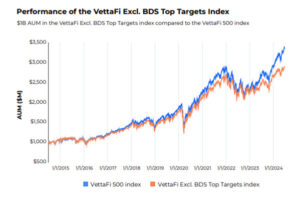
From JLens, The Impact of Israel Divestment on Equity Portfolios: Forecasting BDS’s Financial Toll on University Endowments, Fall 2024
The draft guidance, which would appear to introduce significant changes to how the pension funds may be invested, was not publicly released by the Government. Instead, it was circulated to a limited number of councils in December 2025 as part of a “closed consultation”. It was published by Islington Council, possibly by mistake, as part of publicly available papers for a Pensions Committee meeting in March 2026 (see page 211 sq.).
Lack of Transparency
UKLFI has written to government ministers expressing concern that proposed guidance with such significant potential financial implications, as well as impacts on community cohesion, has not been subject to full and open public consultation.
The draft guidance relates to how LGPS administering authorities formulate their Investment Strategy Statements, including the circumstances in which non-financial considerations, such as environmental, social and governance (ESG) factors, may influence investment decisions.
Guidance on this matter given by the previous government was successfully challenged in litigation that went up to the UK Supreme Court.
Potential Financial Impact
UKLFI’s analysis highlights significant financial risks that may ensue from the proposed changes, if they are interpreted as enabling or even encouraging politically motivated divestments and exclusions.
Drawing on a US-based study of the impact of the exclusion of top targets of BDS campaigns against Israel on a diversified equity index between 2014 and 2024, UKLFI warns that:
- The compounded impact of such divestments over an extended period can substantially reduce long-term returns
- If a similar outcome were to occur in relation to the assets currently held by UK LGPS funds, the return would be reduced by £200 billion after 10 years
UKLFI points out that the employee contributions and benefits of the LGPS are set by legislation, so any loss of return has to be borne by the public sector employers that are members of the scheme. This means that the loss would ultimately result in higher taxes, reduced public services and/or more public sector borrowing.
Government Response
Responding on behalf of the government to written questions by Baroness Altmann, Baroness Taylor has confirmed that the guidance will not be subject to formal public consultation and stated that
“The guidance is expected to restate the existing position that when setting their investment strategy administering authorities must consider all factors, including environmental, social and governance factors, that are financially material to the performance of investments, and that non-financial factors can also be taken into account provided they do not risk significant financial detriment to the scheme and administering authorities have good reason to believe scheme members would support the decision.”
However, this answer does not appear to accord with the ambiguous and self-contradictory draft guidance circulated in December 2025.
Concerns Over Legal and Fiduciary Risks
UKLFI argues that the draft new guidance:
- Creates ambiguity that will be seized upon by activists seeking to use pension scheme funds to promote political causes
- Weakens existing fiduciary safeguards that ensure financially responsible investment decisions
- Is self-contradictory and liable to result in unlawful decisions
The organisation emphasises that pension fund administrators are legally required to act in the best financial interests of members, and that any deviation from this principle could have serious consequences.
Wider Economic and Social Implications
Beyond financial risks, UKLFI warns of broader impacts, including:
- Potential market distortion from coordinated divestment across pooled funds
- Negative signals to global investors about the UK’s investment environment
- Risks to community cohesion, where investment decisions become vehicles for contentious political campaigns
UKLFI warns that demands for divestment provide a platform for false allegations of Israeli crimes and human rights violations, contributing to a massive rise of antisemitism that is jeopardising the safety and future of Britain’s Jewish community.
Call for Urgent Review and Open Consultation
UKLFI calls on the government to:
- Pause the adoption of the draft guidance
- Publish the full text of the draft transparently
- Conduct a proper public consultation
- Ensure that any revised guidance upholds and reinforces fiduciary duties and financial prudence
The organisation has submitted proposed changes to the draft new guidance aimed at preserving compliance with fiduciary duties and financial discipline.
Jonathan Turner, Chief Executive of UKLFI, said:
“The draft new guidance is muddled, ambiguous and self-contradictory. It will be seized upon by activists promoting divestments that could result in very serious financial detriments for the UK public sector. Encouraging these activists will further undermine community cohesion. It is deeply troubling that changes of this consequence appear to have been developed behind closed doors and only surfaced accidentally.”