

UK Lawyers for Israel (UKLFI) has written to the organisers of the MOBO Awards and to the BBC to raise serious concerns about the planned inclusion of grime artist Wiley in this year’s event.
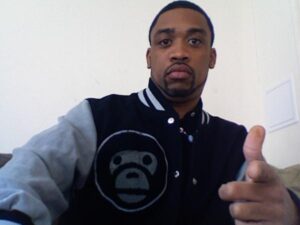
The 2026 Music of Black Origin (MOBO) Awards are scheduled to take place on 26 March, with the BBC acting as the official broadcast partner. According to the MOBO website, Wiley is due to appear in a “MOBO Salutes: Grime 25” medley performance and is also listed as one of the nominees in the “Best Grime Act supported by Trench” category. The awards, now 30 years old, will be held at Co-op Live in Manchester, and Jewish leaders in Manchester have already expressed concerns over the inclusion of controversial rapper Wiley in the line-up of artists due to perform at the MOBO Awards.
In letters sent to MOBO founder Kanya King and to BBC Chair Samir Shah and Chief Content Officer Kate Phillips, UKLFI highlighted Wiley’s widely documented history of antisemitic statements made on social media in 2020 and pointed out legal issues that could arise.
These posts included comparing Jewish people to the Ku Klux Klan, promoting conspiracy theories alleging Jewish control of global industries, and publishing a video titled “The Jewish Faces that Control Hip-hop and Mainstream Black Music.” Wiley also targeted several Jewish individuals, including his former manager John Woolf, Lord Alan Sugar, comedian David Baddiel and BBC presenter Emma Barnett.
The posts led to widespread condemnation and resulted in Wiley being removed from several major social media platforms.
UKLFI warned that giving Wiley a prominent platform at a major cultural event risks causing distress to Jewish audiences and could raise legal concerns.
In its letter to the MOBO organisers, UKLFI noted that under the Equality Act 2010, service providers must not create environments that are intimidating, hostile or offensive for individuals with protected characteristics, including religion or race. The organisation said that knowingly inviting a performer with a record of antisemitic remarks could contribute to such an environment for Jewish attendees, artists or staff.
UKLFI also pointed to potential public order considerations under the Public Order Act 1986, noting that the use of threatening, abusive or insulting words that could stir up racial hatred may constitute a criminal offence.
In its separate letter to the BBC, UKLFI argued that broadcasting a performance by Wiley could raise issues under the BBC’s Editorial Guidelines and the Ofcom Broadcasting Code, which require broadcasters to ensure that offensive or harmful material is justified by context.
UKLFI also referred to the controversy that followed the BBC’s broadcast of Bob Vylan during coverage of the Glastonbury Festival, which prompted criticism and questions about editorial oversight.
UKLFI suggested that the BBC could engage with the MOBO organisers to ensure that its coverage does not provide a platform for an individual associated with antisemitic rhetoric.
UKLFI wrote to the organisers: “MOBO is a major cultural event that celebrates music, creativity and diversity. It should not be showcasing an act with a proven history of antisemitism.”
A spokesperson for UK Lawyers for Israel said: “Allowing Wiley to participate risks sending a troubling message that his history of antisemitic behaviour can be overlooked. At a time when antisemitism is rising in the UK, it is deeply concerning that a performer with a documented record of antisemitic statements could be given such a prominent platform. Major cultural events and broadcasters have a responsibility to ensure that their programming does not legitimise or normalise hate.”
UKLFI has asked both the MOBO organisers and the BBC to review the matter urgently.
Marc Levy, chief executive of the Jewish Representative Council, told the Manchester Evening News: “In the context of the recent attack at Heaton Park, which has left the Jewish community shaken, it is especially important that public events bring people together in a spirit of respect, and solidarity ….. Platforms that celebrate culture and creativity must also demonstrate moral leadership.”
Wiley, real name Richard Cowie, was awarded an MBE for his services to music in 2017, but went on to be stripped of the honour, in 2024, over antisemitic comments on social media in 2020. He later told Sky News the tweets were the result of a dispute with his then manager, who is Jewish. He said: “I’m not racist. My comments should not have been directed to all Jews or Jewish people. I want to apologise for generalising, and I want to apologise for comments that were looked at as antisemitic. I just want to apologise for generalising and going outside of the people who I was talking to within the workspace and workplace I work in. I’m not racist, you know. I’m a businessman. My thing should have stayed between me and my manager, I get that.”